
The Missing Piece in Pain Care: Why Myofascial Release Treats the Body the Way It Actually Works
- Qarib Ahmed
- Jul 10
- 5 min read

If you’ve been dealing with chronic pain — back pain, headaches, pelvic pain, a sports injury that never quite healed — you’ve probably tried a lot of things. Stretching. Massage. Chiropractic adjustments. Maybe injections or even surgery. And maybe you got some relief, but the pain came back.
That’s because most treatments focus on the symptom — the spot that hurts — without addressing the underlying structure that connects everything: your fascia.
What Is Fascia, Really?
Fascia is a slightly mobile connective tissue, derived embryologically from the mesoderm. It’s composed of an elasto-collagenous complex that includes a matrix — or ground substance — that transports metabolic material throughout the body.
But that clinical definition doesn’t quite capture what it does.
Think of fascia as a three-dimensional web that extends continuously from the top of your head to the tips of your toes, without interruption. It surrounds and infuses with every organ, muscle, bone, nerve, and blood vessel — all the way down to the cellular level. Your entire body is connected through this single, uninterrupted fabric.
Here’s something most people don’t realize: when you get an MRI, X-ray, or CT scan, they aren’t looking at fascia. These imaging technologies are designed to visualize bones, organs, and soft tissue masses — but fascia itself is largely invisible on standard scans. That means you can have significant fascial restrictions causing pain, limited mobility, and dysfunction, and every scan comes back “normal.” This is why so many people with chronic pain are told nothing is wrong — the problem is there, but the standard tools aren’t looking for it.
For too long, fascia has been largely overlooked by the medical community. But recently, research has been catching up, confirming what practitioners of myofascial release have known for decades: fascia is central to how pain, movement, and healing work.
How Fascia Gets Stuck
Fascia is designed to be free-flowing, gliding and shifting as your body moves. But it responds to everything your body goes through:
Physical injury — a fall, a car accident, repetitive strain
Posture — hours sitting at a desk, sleeping in a bad position
Surgery — scars and tissue trauma create fascial restrictions
Emotional injury — stress, trauma, and tension all live in the tissue
Pain itself — the body guards and tightens around painful areas
If left untreated, fascia can change from its free-flowing form to a very viscous, dense, restricted state. This puts immense pressure on the body and internal organs. The loss of fascial mobility creates a drag on the entire fascial system, which manifests as abnormal alterations in cranial physiological motion, restricted movement, and persistent pain.
And again — none of this will show up on an MRI or X-ray. You can have significant fascial restriction driving your symptoms while your scans look perfectly clean.
How Myofascial Release Is Different
Myofascial release (MFR) works by using gentle sustained pressure into the myofascial connective tissue restrictions to eliminate pain and restore motion.
The key word there is sustained.
Unlike stretching, which typically involves a quick pull and release, or massage, which uses gliding and compression, myofascial release relies on holding pressure into a restriction. 90 seconds is the minimum — and often the holds are maintained much longer, based on what the patient needs. This timing is critical. It allows the fascia to respond to the pressure, impacting the viscous flow and triggering the piezoelectric phenomenon that helps the tissue elongate and release.
This gentle, sustained approach gives the fascia the ability to reshape and support the body as it was designed to. It’s not about forcing the tissue to change — it’s about giving it the time and space to let go on its own.
Stretching vs. Myofascial Release
A common question I get is: “Isn’t this just stretching?”
No. Stretching is a good tool for keeping the body flexible and mobile, but it doesn’t treat the fascia in the same way. The difference comes down to:
Time — MFR holds positions for 90 seconds minimum, often much longer — not 10-30 seconds
Pressure — Gentle, sustained, and directed into the restriction, not pulling on a muscle belly
Intention — We’re looking for the release of the fascial system, not just lengthening a muscle
What Myofascial Release Can Help With
MFR is remarkably versatile because the fascia connects everything. Restrictions in your lower back can cause tension in your neck. Scar tissue from an old surgery can pull on organs and create pain years later. A fall from ten years ago might be the root cause of your current hip pain.
Conditions I regularly treat with myofascial release include:
Back pain — acute and chronic
Headaches — tension headaches and migraines
Neck pain — including whiplash
Pelvic pain
Sports injuries
Disc problems
TMJ / jaw pain
Post-surgical restrictions and scar tissue
Stroke recovery — addressing stiffness and tone on one side
And many more
The sooner someone is treated with myofascial release after an injury, the better the recovery tends to be. But I’ve had excellent success with patients suffering from chronic pain for years — the body is capable of healing at any stage.
The Whole-Body Approach
I don’t treat spots on the body. The body is connected head to toe, and myofascial release treats it as such. A restriction in your foot can show up as tension in your jaw. A fall on your tailbone twenty years ago can present as chronic low back pain today. If you only treat where it hurts, you miss the root cause.
This whole-body philosophy is why I became a John Barnes myofascial release practitioner. His approach recognizes that pain isn’t just physical — it also has mental and emotional dimensions. Myofascial release can positively impact mental health, reduce pain, increase range of motion, improve strength, and result in a meaningful improvement in overall quality of life.
What to Expect in a Session
A typical myofascial release session is scheduled for one hour. MFR is a form of treatment that relies on having ample time — rushing the fascia doesn’t work. The treatment is performed with you on a treatment table, as I apply gentle sustained pressure to areas of restriction.
For the best results, hands-on-skin contact is ideal — it allows me to feel the fascial restrictions directly and work with the tissue more precisely. That said, I fully respect your privacy and comfort level. We’ll work with whatever you’re comfortable with, and I’ll never push beyond that boundary.
Because I’m a mobile practice, I come to your home anywhere in Fairfield and New Haven counties. No waiting rooms, no travel time, no rushing to make an appointment fit into your day.
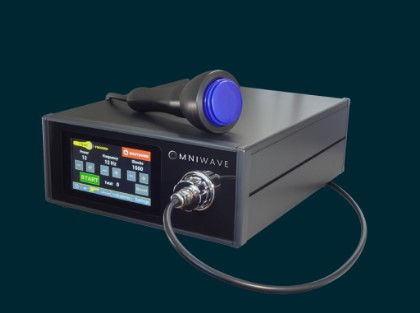
And for many patients, combining myofascial release with shockwave therapy produces remarkable results. The MFR prepares the tissue by releasing fascial restrictions, then shockwave stimulates regeneration at the cellular level. The two work synergistically — I offer a combined MFR + Shockwave session for patients who want that deeper level of healing.
Is Myofascial Release Right for You?
If you’ve been living with pain — whether it started last week or ten years ago — and you haven’t found lasting relief, myofascial release may be the missing piece. It’s gentle enough for acute injuries and powerful enough for chronic conditions that have resisted everything else.
I offer free 15-minute phone consultations to discuss your condition and determine if this approach is right for you. If you’re in Fairfield or New Haven County, I’ll come to you.
Comments