★ FULLY MOBILE PRACTICE — I COME TO YOU IN FAIRFIELD AND NEW HAVEN COUNTIES ★
Tranquil wellness background

Fully Mobile Therapy

Healing that comes to you. Live life without limits.

Promoting healthy living to improve the quality of life for all people. I provide advanced, holistic manual therapy directly in the comfort of your home across Fairfield and New Haven counties.

Book a Consultation Learn More
See the therapy in action

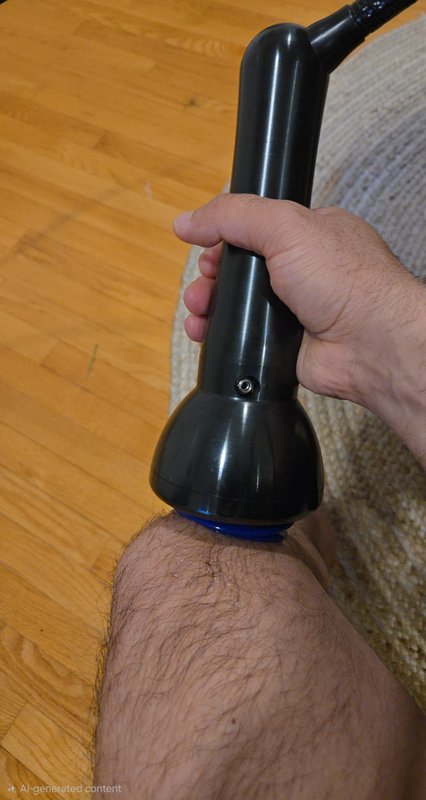
Focused Shockwave Therapy for the Knee

This short treatment demonstration offers a closer look at how focused shockwave therapy is applied with precision to support the body's natural healing response.

  • Noninvasive, focused treatment
  • Applied directly to the targeted area
  • Little to No Downtime
  • Included in a plan tailored to the individual
Explore Shockwave Services

Actual treatment demonstration. Treatment recommendations and individual responses may vary.

Qarib Ahmed at his practice
Qarib Ahmed standing by Omniwave device

My Story

Meet Qarib Ahmed, Licensed Occupational Therapist

With 18 years of experience as an Occupational Therapist across inpatient, acute, subacute, outpatient, and homecare settings, and as an adjunct professor at Sacred Heart University, I have made manual therapy my passion and life's work. My journey started in 2008 as an Occupational Therapy Assistant, and I returned to graduate from Sacred Heart University with my Master's in 2013.

In my years of practice, I noticed a critical aspect missing in typical healthcare: the treatment of human fascia. I have extensive knowledge in physical dysfunction, neurological, and orthopedic conditions. I see an individual as a whole person, not just a diagnosis with a "set path" to recovery. The body is connected from head to toe, and the principles of Myofascial Release treat it as such.

My mission is to facilitate true physical and emotional healing outside the constraints of our limiting healthcare system. By reducing acute and chronic pain, we may decrease or eliminate the need for pain medication, allowing you to participate in meaningful activities to the best of your abilities.

Our Core Therapies

Advanced, non-invasive treatments designed to work with your body's natural healing capabilities.

Abstract fascia healing

Myofascial Release Therapy (MFR)

Myofascial release is a gentle, hands-on therapy developed by John F. Barnes that works with the fascia, the continuous connective tissue web that surrounds every muscle, bone, and organ in your body. Rather than forcing the tissue, I apply gentle, sustained pressure to the body. The pressure is maintained minimally from 90 seconds to several minutes to allow the fascia to soften and release on its own. The body is free to heal the way it’s designed to.

True Electrohydraulic Shockwave Therapy

Most "shockwave" devices on the market only emit a radial pressure wave that dissipates at the skin's surface. We use the Omni wave device—state of the art True Shockwave technology.

A high-voltage spark creates a plasma bubble, emitting focused acoustic energy that signals your body's stem cells to activate. This rapidly triggers growth factors (VEGF, TGF-β1, BMP-2), directing your own mesenchymal stem cells to dock and regenerate tissue at the injury site. No needle. No lab. No rejection risk.

Sessions are only 5-7 minutes long, unlocking incredible regenerative healing.

Omniwave Shockwave Machine
Mobile treatment, clearly explained

How Electrohydraulic Shockwave Therapy Works

Learn how the treatment is delivered, what makes this technology different, and whether a personalized mobile shockwave plan may be right for you.

A concise introduction to mobile shockwave therapy. Treatment recommendations and individual responses may vary.

Electrohydraulic Shockwave FAQ

How long is each session?
Usually between 5-7 minutes. Between set-up and clean-up, the time commitment is between 20-30 minutes.
How many sessions do I need?
Depends on your condition. For acute issues between 4-6 sessions, and for chronic issues 12-14 sessions and then re-evaluate.
Is the session painful?
It is usually pain-free, however at times we can go over a real sensitive area which can feel sore.
Can I get soreness after treatment?
Some people can experience soreness after treatment which shouldn't last for more than 24-48 hours and usually reduces after subsequent sessions.
Do I need to use heat/ice after sessions?
No, using ice or anti-inflammatories are not required and may interfere in the healing process. If needed use something which does not have an anti-inflammatory component.
Are there any precautions?
Currently Electrohydraulic Shockwave is not recommended for someone who is pregnant, someone under 18 and someone with active cancers. Caution is utilized when working in areas around implants.

About Myofascial Release (MFR)

What is Fascia?

A slightly mobile connective tissue which is derived embryologically from the mesoderm.

It’s composed of an elasto-collagenous complex, including a matrix or ground substance which transports metabolic material through the body. It creates a three-dimensional web which extends continuously from the top of the head to the tip of the toes, without interruption. It surrounds and infuses with every organ, muscle, bone, nerve, and blood vessel all the way down to the cellular level.

How does Fascia become stuck?

Fascia responds to the constant changes a body goes through. It responds to workload, physical injury, emotional injury, posture, pain, surgery, and many things the human body deals with daily. If left untreated, fascia can change its free-flowing form to a very viscous, dense form which can cause immense pressure on the body and all internal organs. The loss of fascial mobility produces a drag on the fascial system which manifests as abnormal alteration in the cranial physiological motion.

How does Myofascial release help?

Myofascial release works by using gentle, sustained pressure into the myofascial connective tissue restrictions to eliminate pain and restore motion. Timing is an important part of true myofascial release as it impacts the viscous flow and the piezoelectric phenomenon. This gentle pressure allows for fascial tissue to elongate and gives it great ability to reshape and support the body. I do not put a time limit on how long I hold the pressure for, I allow the body to guide me. Minimum pressure hold is 90 seconds and it can go on for several minutes.

Specialized Neurological Recovery

Stroke & Parkinson's Disease Strategies

As a Certified Neurological Specialist (CNS), I am uniquely equipped to help clients suffering from Strokes, Parkinson's Disease, Multiple Sclerosis (MS), and Traumatic Brain Injury (TBI). My holistic approaches focus on tone management, body orientation, tremor management, muscle strength, and restoring vital self-care routines.

  • LSVT-BIG Certified: A specific treatment modality for clients with Parkinson's Disease focusing on improving balance, gait, handwriting, and making movements "normal" sized again.
  • Orthopedic Manual Therapy (COMT-UE): Specialized strategies to address upper extremity weakness and movement disorders common during recovery.
  • Dry Needling: A highly effective technique using a "dry" needle inserted into trigger points to relieve pain, improve range of motion, and promote healing in the muscle and connective tissues.
  • Myofascial Release & FMT: Hands-on techniques to relieve rigidity, one-sided stiffness, and promote comfortable total body movement, including the oral motor complex to improve swallow function.
  • IASTM / Cupping: Use of smooth metal tools and/or dry cupping to influence the neuro-sensory system, fascia, and muscles to reduce pain and improve mobility and blood flow.
  • Exercise-Based: A customized exercise plan in conjunction with Myofascial Release, helping patients progress toward their personal goals of physical and mental well-being.

Conditions We Treat

While the majority of our experience is with adult and geriatric populations, we proudly assist persons of all ages and genders with complex conditions.

Back & Neck Pain
Shoulder & Elbow Pain
Headaches & Migraines
Sports Injuries & Whiplash
Pelvic Pain & Floor Dysfunction
Disc Problems & Sciatica
Stroke & Parkinson's Disease
Balance Issues & Muscle Weakness
Fibromyalgia & Chronic Fatigue
Carpal Tunnel & TMJ
Lymphedema & Adhesions
Scoliosis & Myofascial Pain
Urinary Incontinence & Silent Reflux
Hardened Breast Tissue & Scars
Post-Surgery & Restricted Motion
Neurological Dys. & Concussions
Tinnitus

Services & Pricing

All treatments are provided one-on-one. Frequencies are individualized based on a comprehensive evaluation.

Free Phone Consultation

15 Minutes

A complementary call to discuss your symptoms and determine if our holistic manual therapy is right for you.

Free
Request to Book

Initial Evaluation

1 Hour 30 Minutes

A thorough interview, pain and postural assessment, followed immediately by the start of your treatment.

$225
Request to Book

Custom Treatment Session

60 Minutes

Targeted, one-on-one manual therapy focusing on myofascial release to relieve your unique pain points.

$175
Request to Book

Extended Treatment Session

90 Minutes

An extended one-on-one treatment session allowing deeper fascial unwinding and comprehensive relief.

$245
Request to Book

MFR + Shockwave Session

60 Minutes

The ultimate advanced recovery. Combines targeted myofascial release with electrohydraulic shockwave technology.

$275
Book Now

Dry Needling

Add-on service

Relieve pain, improve range of motion, and stimulate healing with precision dry needling.

Inquire
Book Now

Discounted Treatment Packages: Shockwave

For our comprehensive Custom Treatment Sessions, we offer bundled packages to support your recovery journey.

4+1 Basic Acute Recovery

For persons aiming to heal from an acute injury.

5 total shockwave sessions for the price of 4.

Please call to see if you qualify for the discounted acute injury package.

7+1 Advanced Acute Recovery

For persons aiming to heal from an acute injury.

8 total shockwave sessions for the price of 7.

Please call to see if you qualify for the discounted acute injury package.

12+2 Chronic Recovery

For persons aiming to heal from a chronic injury.

14 total shockwave sessions for the price of 12.

Please call to see if you qualify for the discounted chronic injury package.

Inquire About Packages

Payment Policies

To provide you with unrestricted, holistic care, I do not accept any insurance policies.

Accepted forms of payment include Cash, Check, or Zelle QR code.

* Payment plans can be discussed on an individual basis.

Book Online

Choose a service and pick a time that works for you.

Success Stories

Hear from some of the many patients who have reclaimed their lives.

“

Thank you for the healing that has been taking place within me. I can now have the range of motion in my neck, so important for driving. My legs have become more flexible and my shoulder is moving in the right direction.

- P.L.

“

Qarib is knowledgeable, intuitive and sincerely committed to his clients. He evaluates the origins of pain and knowingly finds the source. Where he sees reduced motility, he improves function. I no longer experience chronic pain in my pelvic/sacral area and have increased my range of movement in my lower torso. I've always taken good care of myself but could not go further until I met Qarib.

- H.L.

“

I met Qarib a while ago, he was helping my wife with a variety of ailments including her elbow pain. He was the only one able to help her. Recently, I described my incontinence problem... After one day of treatment, I no longer leaked when I was awake or when I was asleep. From then on, when I woke up, I was completely dry... I would be delighted to personally recommend Qarib. He is truly an unusually gifted young man.

- L.R.

“

Qarib has been a pleasure to work with. He is punctual, patient, knowledgeable, and gentle working with my father. You can tell he is passionate about his work. He takes the time to explain his every move and answers any questions. Highly recommend!

- Melanie J.

“

Qarib is exceptional and his therapy impact can’t be understated. He helped my mother in life altering ways and I credit him with extending her quality of life. His compassion and patience are strong qualities as well.

- Daniel D.

“

I had taken a hard fall as a consequence of contending with hurricane Isaias, injuring my left shoulder. My delay in addressing the matter didn't help. Qarib was kind enough to take me on. With patience, clear explanation, and well-honed process he guided me in recovery. What strikes me most is the nature of the relationship we established. In an era of production line medicine, Qarib is a shining counterexample.

- J.D.

“

Qarib was my therapist for my severe thoracic and scapular pain. He is amazing, thorough, and has very good manual techniques. I felt better and better every session and am now pain free, following the exercise regime he set for me. Couldn’t recommend him highly enough!

- Sheelagh

“

I am so grateful that I saw Qarib for my sciatica pain. He was extremely professional throughout, took his time to explain everything and provided optimal treatment... Qarib was able to provide me relief to be able to function during the day and at its worst, afforded me the ability to sleep... I am forever grateful for his help/assistance through this time in my life.

- Mike

“

"Q" is amazing and I highly recommend him! His hands are gentle, but strong and no matter what ails you he finds your "spot". You feel pain free and so relaxed after his sessions.

- Christine

“

Q has been my therapist for the last 3 years since my stroke. He has helped me immensely with the spasticity in my arm and leg. He is kind, compassionate and very encouraging. I’ve had many occupational therapists over the years and Q is one of the best! Highly recommend.

- Lynne O.

“

Q is a magician! His healing hands has accelerated my rehabilitation. As the nerve enervation in my legs are recovering, Q’s myofascial release in conjunction with my physical therapy has significantly reduced pain and increased motion in my legs. His therapy and caring bedside manner has helped me cope and heal at the same time. Without reservation, I highly recommend Qarib to treat anyone!

- Joseph P.

“

Qarib treated my Mom for post stroke sciatica and spasticity pain. His treatment gave my Mom’s body well needed relief from pain she was experiencing. Qarib is extremely professional and knowledgeable. We highly recommend Qarib.

- Lisa Moscato

“

It is my pleasure to recommend Qarib Ahmed, Myofascial Release therapist... The search criteria stipulated treatment must be non surgical, non pharmacological and non chiropractic, with the goals of physical comfort and normal function. Qarib is a certified myofascial release therapist who guides and supports a client's healing process, achieving and surpassing the intended goals.

- K.I.

“

After an unfortunate shoulder injury, Qarib's technique helped me reduce my pain and assisted me in gaining back my full range of motion. As an Occupational Therapist myself, I knew the importance of having hands-on therapy during the recovery period. I personally would not trust anyone else as I have seen what he can do first hand; now I have experienced it! Thanks so much!

- A.A.

Get in Touch

Have a question or want to schedule your mobile therapy session? Send me a message directly.

Frequently Asked Questions

Does science support the importance of fascia and myofascial release (MFR)?

Absolutely! For too long, fascia has been largely overlooked by the medical community as a whole. Recently, more research is coming in support of the importance of fascia and its role in our health and wellbeing.

Is myofascial release the same as stretching?

No. Stretching is a good tool to keep the body flexible and mobile, but stretching in the 'typical' form does not treat the fascia. In MFR, the various positions and holds are performed for a minimum of 90 seconds (and often much longer), focusing deeply on the mind/body connection to allow the tissue to elongate.

Can myofascial release treat chronic pain?

Yes. I have treated many patients with various chronic pains who have "tried everything else" and come to me as a last resort. As with any treatment, the quicker someone is treated the better the recovery, but I have had great success with patients suffering from long-term chronic pain.

Are there ever any adverse reactions to treatment?

The majority of patients don't experience any adverse reactions. Some experience soreness in the area worked on directly, or in other parts of the body, as the body reacts to this unique form of treatment. Any reactions typically resolve within a few hours, and at most within 72 hours.

What is therapeutic pain?

Not all discomfort is bad. At times after MFR treatment, our bodies can go through therapeutic pain which can present as soreness, a mild headache, or feeling woozy. Our philosophy isn't to cover up the pain with medication—it's to deal with it and get past it so you can live a fulfilling life.

What is a myofascial unwinding?

It's a process in which a patient may spontaneously move a part of their body or their entire body. It can be an emotional experience for some. The idea is letting the body be free and uninhibited, trusting that it will keep itself safe to deepen your understanding of your own healing.

Do I need to wear comfortable clothing for treatment?

Yes. In MFR, access to the body is important as it is a hands-on treatment where contact with the skin is critical. However, I completely respect everyone's comfort level and personal boundaries.

How much treatment do you do during the initial visit?

During the initial visit, it's almost all treatment. Whether you are getting body work or any other therapies, most of the questions are answered via the intake forms. The forms are emailed to all my clients prior to the evaluation. Therefore, when we meet, I get to work as quickly as possible.

From the Blog

Deeper dives into the science and philosophy behind the therapies I offer.

July 10, 2026  ·  Myofascial Release

The Missing Piece in Pain Care: Why Myofascial Release Treats the Body the Way It Actually Works

If you’ve been dealing with chronic pain — back pain, headaches, pelvic pain, a sports injury that never quite healed — you’ve probably tried a lot of things. Stretching. Massage. Chiropractic adjustments. Maybe injections or even surgery. And maybe you got some relief, but the pain came back.

Read ArticleClose Article

That’s because most treatments focus on the symptom — the spot that hurts — without addressing the underlying structure that connects everything: your fascia.

What Is Fascia, Really?

Fascia is a slightly mobile connective tissue, derived embryologically from the mesoderm. It’s composed of an elasto-collagenous complex that includes a matrix — or ground substance — that transports metabolic material throughout the body.

But that clinical definition doesn’t quite capture what it does.

Think of fascia as a three-dimensional web that extends continuously from the top of your head to the tips of your toes, without interruption. It surrounds and infuses with every organ, muscle, bone, nerve, and blood vessel — all the way down to the cellular level. Your entire body is connected through this single, uninterrupted fabric.

Here’s something most people don’t realize: when you get an MRI, X-ray, or CT scan, they aren’t looking at fascia. These imaging technologies are designed to visualize bones, organs, and soft tissue masses — but fascia itself is largely invisible on standard scans. That means you can have significant fascial restrictions causing pain, limited mobility, and dysfunction, and every scan comes back “normal.” This is why so many people with chronic pain are told nothing is wrong — the problem is there, but the standard tools aren’t looking for it.

For too long, fascia has been largely overlooked by the medical community. But recently, research has been catching up, confirming what practitioners of myofascial release have known for decades: fascia is central to how pain, movement, and healing work.

How Fascia Gets Stuck

Fascia is designed to be free-flowing, gliding and shifting as your body moves. But it responds to everything your body goes through:

  • Physical injury — a fall, a car accident, repetitive strain
  • Posture — hours sitting at a desk, sleeping in a bad position
  • Surgery — scars and tissue trauma create fascial restrictions
  • Emotional injury — stress, trauma, and tension all live in the tissue
  • Pain itself — the body guards and tightens around painful areas

If left untreated, fascia can change from its free-flowing form to a very viscous, dense, restricted state. This puts immense pressure on the body and internal organs. The loss of fascial mobility creates a drag on the entire fascial system, which manifests as abnormal alterations in cranial physiological motion, restricted movement, and persistent pain.

And again — none of this will show up on an MRI or X-ray. You can have significant fascial restriction driving your symptoms while your scans look perfectly clean.

How Myofascial Release Is Different

Myofascial release (MFR) works by using gentle sustained pressure into the myofascial connective tissue restrictions to eliminate pain and restore motion.

The key word there is sustained.

Unlike stretching, which typically involves a quick pull and release, or massage, which uses gliding and compression, myofascial release relies on holding pressure into a restriction. 90 seconds is the minimum — and often the holds are maintained much longer, based on what the patient needs. This timing is critical. It allows the fascia to respond to the pressure, impacting the viscous flow and triggering the piezoelectric phenomenon that helps the tissue elongate and release.

This gentle, sustained approach gives the fascia the ability to reshape and support the body as it was designed to. It’s not about forcing the tissue to change — it’s about giving it the time and space to let go on its own.

Stretching vs. Myofascial Release

A common question I get is: “Isn’t this just stretching?”

No. Stretching is a good tool for keeping the body flexible and mobile, but it doesn’t treat the fascia in the same way. The difference comes down to:

  • Time — MFR holds positions for 90 seconds minimum, often much longer — not 10-30 seconds
  • Pressure — Gentle, sustained, and directed into the restriction, not pulling on a muscle belly
  • Intention — We’re looking for the release of the fascial system, not just lengthening a muscle

What Myofascial Release Can Help With

MFR is remarkably versatile because the fascia connects everything. Restrictions in your lower back can cause tension in your neck. Scar tissue from an old surgery can pull on organs and create pain years later. A fall from ten years ago might be the root cause of your current hip pain.

Conditions I regularly treat with myofascial release include:

  • Back pain — acute and chronic
  • Headaches — tension headaches and migraines
  • Neck pain — including whiplash
  • Pelvic pain
  • Sports injuries
  • Disc problems
  • TMJ / jaw pain
  • Post-surgical restrictions and scar tissue
  • Stroke recovery — addressing stiffness and tone on one side
  • And many more

The sooner someone is treated with myofascial release after an injury, the better the recovery tends to be. But I’ve had excellent success with patients suffering from chronic pain for years — the body is capable of healing at any stage.

The Whole-Body Approach

I don’t treat spots on the body. The body is connected head to toe, and myofascial release treats it as such. A restriction in your foot can show up as tension in your jaw. A fall on your tailbone twenty years ago can present as chronic low back pain today. If you only treat where it hurts, you miss the root cause.

This whole-body philosophy is why I became a John Barnes myofascial release practitioner. His approach recognizes that pain isn’t just physical — it also has mental and emotional dimensions. Myofascial release can positively impact mental health, reduce pain, increase range of motion, improve strength, and result in a meaningful improvement in overall quality of life.

What to Expect in a Session

A typical myofascial release session is scheduled for one hour. MFR is a form of treatment that relies on having ample time — rushing the fascia doesn’t work. The treatment is performed with you on a treatment table, as I apply gentle sustained pressure to areas of restriction.

For the best results, hands-on-skin contact is ideal — it allows me to feel the fascial restrictions directly and work with the tissue more precisely. That said, I fully respect your privacy and comfort level. We’ll work with whatever you’re comfortable with, and I’ll never push beyond that boundary.

Because I’m a mobile practice, I come to your home anywhere in Fairfield and New Haven counties. No waiting rooms, no travel time, no rushing to make an appointment fit into your day.

And for many patients, combining myofascial release with shockwave therapy produces remarkable results. The MFR prepares the tissue by releasing fascial restrictions, then shockwave stimulates regeneration at the cellular level. The two work synergistically — I offer a combined MFR + Shockwave session for patients who want that deeper level of healing.

Is Myofascial Release Right for You?

If you’ve been living with pain — whether it started last week or ten years ago — and you haven’t found lasting relief, myofascial release may be the missing piece. It’s gentle enough for acute injuries and powerful enough for chronic conditions that have resisted everything else.

I offer free 15-minute phone consultations to discuss your condition and determine if this approach is right for you. If you’re in Fairfield or New Haven County, I’ll come to you.

Book a Free Consultation

July 9, 2026  ·  Shockwave Therapy

Beyond Surface-Level: Why Electrohydraulic Shockwave Therapy Outperforms Other Modalities for Acute and Chronic Healing

If you’ve been researching shockwave therapy, you’ve probably noticed there are different types — radial, piezoelectric, electromagnetic, electrohydraulic — and it can get confusing fast. The term “shockwave” gets thrown around loosely, but not all devices are created equal. In fact, most devices on the market aren’t true shockwaves at all.

Read ArticleClose Article

Let’s break down what actually matters when it comes to healing, whether you’re dealing with a fresh injury or something that’s been lingering for years.

Radial vs. True Shockwave: Not the Same Thing

Radial pressure wave therapy is the most common type you’ll find in clinics. It works by using compressed air to propel a projectile against an applicator, creating a pressure wave that spreads outward radially — like a ripple in a pond. The energy starts strong at the surface but dissipates quickly as it travels deeper.

Radial devices are not true shockwaves. They produce lower peak pressures and significantly slower rise times. The energy stays mostly superficial, making them better suited for larger, surface-level areas like muscle tension in the back or thighs. They’re also generally less precise — the energy fans out rather than focusing on a specific point.

Electrohydraulic shockwave, by contrast, is the original and true shockwave technology. Here’s how it works: a high-voltage spark vaporizes a small amount of water inside the handpiece, creating a plasma bubble that collapses almost instantly. That collapse generates a focused acoustic wave traveling at over 3,300 mph — faster than the speed of sound. An ellipsoid mirror inside the device directs that energy precisely to the target depth, whether that’s a tendon, ligament, or fascia.

This is the technology I use with the OmniWave device as a GAINSWave-certified practitioner. It delivers high-intensity energy exactly where it’s needed, with minimal discomfort.

The Key Differences at a Glance

FeatureRadial (Pressure Wave)Electrohydraulic (True Shockwave)
Energy typeSurface-level pressure waveFocused acoustic shockwave
Peak pressureLow to moderateHigh
Depth of penetrationSuperficial (muscle-level)Deep (tendons, ligaments, bone)
PrecisionDiffuse, spreads outwardFocused, targeted
Rise timeSlowFast (true shockwave)
Best forMuscle tension, large areasTendinopathies, chronic conditions, precise targets

Why True Shockwave Excels for Acute Injuries

Acute injuries — a partial muscle tear, a strained tendon, a sudden onset of pain — involve tissue damage and an immediate inflammatory response. The body knows what to do, but it can be slow, inefficient, or stuck in a cycle of inflammation without progressing to repair.

Electrohydraulic shockwave accelerates this process in a way radial therapy simply can’t match. The focused energy penetrates to the exact depth of the injured tissue and triggers a cellular response:

  • Cell membrane deformation signals the body that healing needs to happen
  • ATP release provides energy for repair processes
  • Growth factors like VEGF, TGF-β1, and IGF-1 are activated
  • Blood flow increases to the area, bringing oxygen and nutrients

For acute injuries, patients often feel a noticeable shift within the first few sessions. The 5-7 minute treatment time means it fits easily into a busy schedule, and because I’m mobile, there’s no commute to a clinic.

Where True Shockwave Really Shines: Chronic Conditions

Chronic conditions are a different animal. Plantar fasciitis that’s been nagging for two years. Tennis elbow that won’t quit. Achilles tendinopathy that sidelines you from the activities you love. These conditions persist because the body has stopped trying to heal — it’s settled into a state of low-grade inflammation and disorganized tissue.

This is where electrohydraulic shockwave separates itself from every other modality.

The high-energy focused wave does something remarkable: it wakes up the healing process. The mechanical force creates micro-damage in chronic, disorganized tissue, which signals the body to break it down and rebuild it properly. But more importantly, it triggers the body’s own regenerative machinery.

Here’s the stem cell activation pathway:

The shockwave deforms cell membranes → ATP releases → growth factors fire (VEGF, TGF-β1, BMP-2, IGF-1) → chemokine gradients form → your mesenchymal stem cells home to the site, dock, multiply, and differentiate into the tissue you need — tendon, ligament, blood vessel, or bone.

No injection. No lab. No risk of rejection. Your body heals itself using its own cells.

Diagram explaining shockwave therapy and its mechanism of action, with before and after illustration of tissue treated by a focused device
How focused shockwave energy reaches the tissue — before and after treatment.
The Regeneration Timeline
TimeframeWhat Happens
SecondsCell signaling cascade begins
0–48 hoursGrowth factor production; stem cell homing signals released
Days 2–7Stem cells arrive and proliferate at the treatment site
Weeks 1–3Stem cells differentiate; new vessels form; pain decreases
Weeks 3–8Tissue remodels — most patients feel the shift here
Months 2–6Full maturation and tissue integrity restored

This timeline explains why chronic conditions often need 4-6 sessions, and sometimes up to 10-14 for stubborn cases. The body is being asked to rebuild tissue that’s been dysfunctional for years — that takes time. But unlike cortisone shots that mask the pain or surgery that comes with downtime and risk, shockwave addresses the root cause.

Comparing to Other Modalities

Radial pressure wave — As discussed, this is a surface-level tool. It can provide temporary relief for muscle tension and may have some benefit for larger, superficial areas. But it lacks the depth, precision, and true shockwave characteristics needed to stimulate deep tissue regeneration. Many clinics use radial devices because they’re cheaper, but patients aren’t getting the same treatment.

Piezoelectric shockwave — These devices generate shockwaves using crystals that vibrate when an electrical current is applied. They produce true shockwaves, but the energy is typically lower intensity and spread across a wider area rather than focused to a precise point. They can be effective, but lack the concentrated power of electrohydraulic technology.

Electromagnetic shockwave — Uses magnetic coils to generate a shockwave. These devices can produce true shockwaves with good depth penetration, but they tend to be bulky, expensive, and less comfortable for patients. The energy delivery is also less precise than electrohydraulic focusing.

Electrohydraulic shockwave — The gold standard. Highest peak pressure, most precise focusing, deepest penetration, and the most comfortable patient experience when using a modern device like the OmniWave. It’s the only technology that combines true shockwave characteristics with pinpoint accuracy and patient comfort.

Why I Chose Electrohydraulic (OmniWave)

OmniWave electrohydraulic shockwave device with handpiece
The OmniWave electrohydraulic shockwave device.

I didn’t choose this technology because it’s the most expensive or the most impressive on paper. I chose it because it gives my patients the best results.

The OmniWave device is widely regarded as one of the most comfortable high-intensity shockwave devices available. The 5-7 minute treatment sessions are quick, well-tolerated, and produce measurable results — whether for a weekend warrior with acute hamstring pain or someone who’s been living with chronic plantar fasciitis for years.

And because I’m a mobile practice serving Fairfield and New Haven counties, you get this advanced technology in the comfort of your own home. No waiting rooms, no travel time, no rushing to make an appointment fit into your day.

Is Shockwave Right for You?

Shockwave therapy is effective for a wide range of conditions:

  • Plantar fasciitis
  • Tennis and golfer’s elbow
  • Achilles tendinopathy
  • Rotator cuff issues
  • Patellar tendinopathy
  • IT band syndrome
  • Back and neck pain
  • And many other musculoskeletal conditions

It’s not appropriate for everyone — contraindications include pregnancy, active cancer, and children under 18 — but for most people dealing with acute or chronic musculoskeletal pain, it’s one of the most effective non-invasive options available.

Ready to see if electrohydraulic shockwave can help you? I offer free 15-minute phone consultations to discuss your condition and determine if this approach is right for you. If you’re in Fairfield or New Haven County, I’ll come to you.

Book a Free Consultation

"spread hope, positivity and strength"

Holistic Healing Manual Therapy